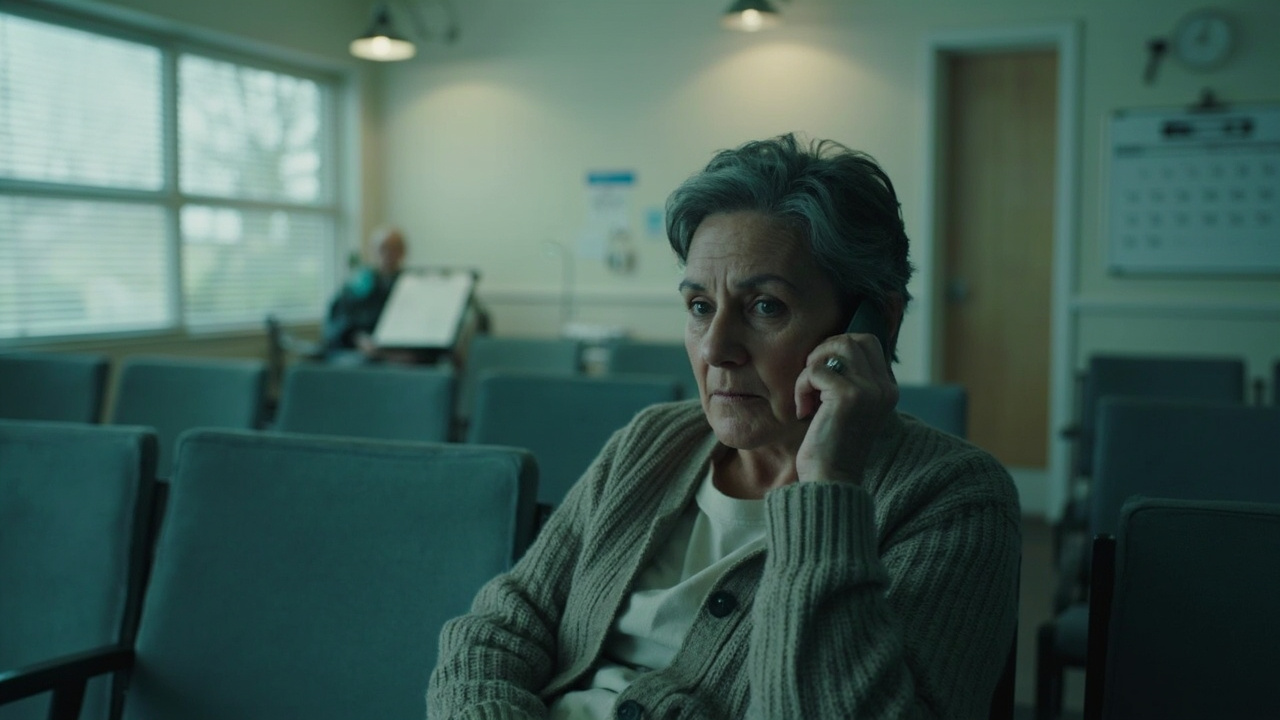
TL;DR: More than half of the 150 Boston-area primary care offices contacted for a Boston Globe audit were either turning away new patients or quoting a first appointment at least three months away.
Patients searching for a new primary care doctor in Greater Boston are hitting a wall their region's reputation never prepared them for. The Globe's Nov. 17, 2026, series, "The Doctor Will See You … Next Year," sent a reporter through 150 doctors' offices by phone and online portal in August and early September, asking for a first physical as a new patient. Twenty-five practices were not taking new patients at all. Seven never picked up. Fifty-two quoted waits of three months or longer. Eighteen quoted six months or more, and at 10 offices the next opening was at least a year out — most of the year-long waits were at Brigham and Women's Hospital clinics.
The search was not a randomized experiment. Practices came from Google, health system websites and "top doctors" lists, and the reporter offered Blue Cross Blue Shield coverage, the plan most offices accept. Even so, the pattern crossed practice types, from independent offices to hospital-owned clinics to corporate and private equity-backed groups.
The hardest doors
Massachusetts General Hospital and Brigham and Women's Hospital were the toughest to crack, according to the Globe, which found no realistic route in, including onto a waitlist. A scheduler at MGH said in early August that there were no openings at all: "You can call back in December and try again." A Boston Medical Center Health System practice offered a waitlist but no timeline. The quickest opening in the entire snapshot sat 90 days away, at a practice in Chelsea. Asking for a physician instead of a nurse practitioner often doubled or tripled the wait.
Where patients could still get in
The picture was not uniformly grim. A handful of offices within Cambridge Health Alliance and Tufts Medicine had appointments within a week, the Globe found. Patients open to a video visit could sometimes be seen the same afternoon, a useful stopgap for a prescription renewal while the search for a permanent doctor continues. Retail clinics, urgent care centers and app-based services such as Amazon One Medical have moved into the gap, the Globe reported. On the clinician side, Dr. Laura Zucker's Family Practice Group in Arlington is closed to new patients, and on one recent Friday her day began at 4:45 a.m. with an inbox holding 32 lab and diagnostic results plus 27 patient messages.
What the audit can and cannot show
Only 16 of the 150 clinics gave wait times for both physicians and other providers, so the gap between doctor and nurse practitioner availability rests on a partial sample. The Globe also described its outreach as a consumer-style test rather than a scientific study, which means the counts describe one insurance type in one region, not a statewide measure.
Why Boston, of all places
Alongside its calls, the Globe surveyed 253 Massachusetts primary care physicians, with Harvard Medical School health policy professor Zirui Song analyzing the responses. Seventy-seven percent said patient portal messages and clinical notes overwhelmed them, while about six in 10 cited too few clinicians, heavy insurance paperwork or a roster tilted toward complex cases. More than one in three said management and administrative work kept them from seeing more people, and roughly one in four blamed teaching responsibilities.
Underneath those answers sit structural forces. Insurers pay specialists more than primary care doctors, and employers do too, so hospitals and health systems steer investment toward specialty lines. Boston's market is more consolidated than most, leaving fewer independent practices. No state has a higher share of residents with health insurance, which lifts demand for appointments. Roughly one in five of the state's primary care physicians is 65 or older.
The pipeline is thinning
Massachusetts medical schools are not replacing the doctors who leave. Fourteen percent of the state's new physicians went into primary care in 2023, down from 19 percent in 2012, while the national figure held at 22 percent, the Globe reported. Only 25 graduates of Massachusetts medical schools matched into family medicine residencies, and one of them, Collin O'Sullivan, 26, moved to Fort Worth, Texas, because Boston was too expensive and offered few training options he wanted.
Independent checks reach the same conclusion
Harvard T.H. Chan School of Public Health's Jose Figueroa, speaking on WBZ News Radio's NightSide with Dan Rea on Nov. 5, noted that Massachusetts has more primary care doctors for its population than any other state and still falls short. In 2025, only 18 percent of graduating medical students said they would choose primary care, he said, because fields such as oncology, gastroenterology and anesthesiology carry more prestige and pay two to three times as much. Primary care doctors in the state have cut their hours by 25 percent, he added, which he tied to burnout. Figueroa said loan repayment help might draw graduates in, though better pay would probably do more.
A separate Lown Institute review contacted 86 hospital or hospital-affiliated offices across Greater Boston and Cape Cod between July 23 and Aug. 13, 2025. Twenty-six percent were not taking new patients; among the 46 offices that provided an estimate, the typical wait was 3.25 months, ranging from under a month to eight months.
The coverage consequence
A missing primary care doctor is less an annoyance than a hole in the front door of the health system. The Globe reported that people without one have a harder time obtaining treatment, preventive screenings and timely advice. Insurance does not reserve a slot: a researcher who contacted the Globe said she could not find a physician who accepted her insurance, and a cancer survivor lost her doctor when he shifted to a concierge practice. A retired physician said he wrote his own prescriptions during six months on a waitlist.
That exit route is widening. Forty percent of surveyed physicians said they had considered concierge or direct primary care, models that can charge annual membership fees of $10,000 or more and keep patient panels small. Nearly half of those who described themselves as very burned out had weighed the move, the Globe found. In written responses, doctors asked for higher primary care payment, a single-payer system and relief from message volume.